
Letting Go and Trusting Your Clients
On the quiet discipline of releasing control, and why the best architecture often happens when you do.
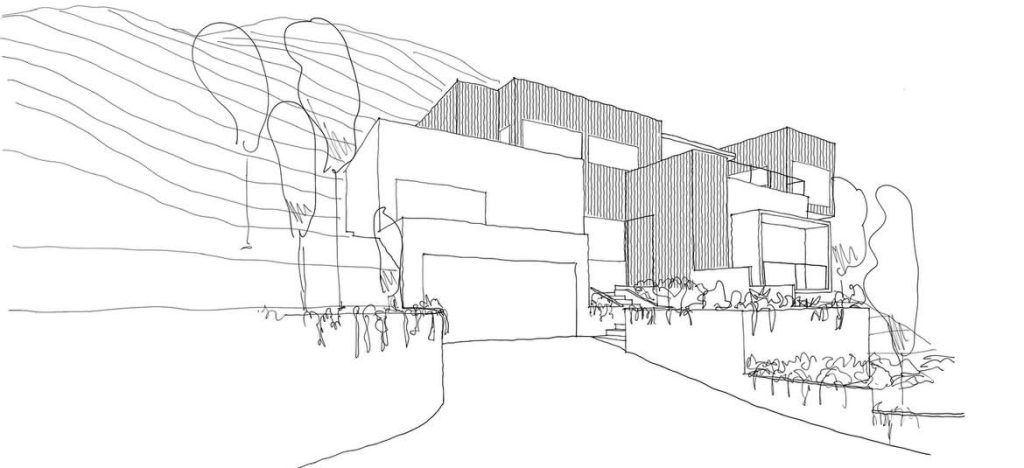
There is a moment in almost every project where an architect has to make a choice: hold on tighter, or let go.
If we are honest, most of us instinctively reach for the first option. Architects tend to be control freaks, not out of arrogance, but out of insecurity. We worry that without our hands on every detail, the vision will slip, the proportions will drift, and the thing we so carefully imagined will arrive at the site as something we no longer recognise. So we hover. We over-document. We answer questions that haven’t been asked. And quietly, we spend ourselves into unprofitability, project after project.
This post is about the other path.
The control problem
Most over-control in architecture is not really about quality, it is about buy-in. When we don’t trust that the client truly understands the vision, or that the builder cares about it the way we do, we compensate by trying to be everywhere at once. The result is predictable: long hours, thin margins, and a strange kind of loneliness in the work, as if we are the only ones carrying it.
The irony is that the more tightly we hold on, the less room there is for anyone else to take ownership. And ownership, it turns out, is what we actually need.
Where the work really happens: the design phase
If letting go is the goal, the design phase is where you earn the right to do it.
This is the moment for intensive, sometimes uncomfortable collaboration, where the client’s vision and the architect’s expertise are pressed together until something coherent emerges. It’s not a transaction. It’s a translation. The client brings the why; we bring the how. Done well, the client leaves the design phase able to defend the vision themselves, in their own words, to anyone who asks.
That last part matters more than most architects admit. The vision has to travel. It has to be communicable to the engineer, the contractor, the concrete mixer, the person pushing a wheelbarrow across the site. Every one of them needs to feel they are contributing to something, not just executing a task. When that happens, the project develops its own gravity. People start protecting it without being asked.
A recent project, and what it taught us
We were recently invited back to a project we had served on as design architects. The early design process was intense, long conversations, hard questions, careful drawings. Then the client took the work and built it themselves, largely without us.
Walking through the finished house, I expected to feel the usual mix of pride and quiet wincing, the small deviations, the missed details. Instead, what struck me was how completely the client owned the place. They moved through it like it was theirs in every sense, not just legally, but emotionally and intellectually. They could explain why a wall sat where it did. They loved the rooms in the way you only love something you’ve helped make.
It was, frankly, a relief. And it was a reminder that letting go isn’t a loss of authorship. It’s a different kind of authorship.

Evolution, not enforcement
Drawings are a guide, not a verdict. What is finished on paper is never quite what is finished on the ground, because the site itself talks back. Light falls differently than you expected. A tree turns out to matter more than the elevation suggested. A material behaves in a way the spec sheet didn’t predict.
Good architects stay available at the sticking points, the moments where a small deviation could either deepen the idea or muddle it. That is where our judgement is genuinely useful. The rest of the time, our job is to get out of the way and let the building become itself.
Architecture is evolution. The details adapt; the feeling stays consistent. If the feeling is intact, the project is intact.
Redefining what success looks like
Letting go is not giving up. It’s not resignation, and it’s not a quiet prelude to disappointment.
When the design phase has done its work, when the communication was honest, the collaboration real, and the vision genuinely shared, there is a very high probability that the finished project will land somewhere between 75 and 85 percent of the original concept. And that remaining 15 to 25 percent? It’s almost always where the project becomes theirs. The client’s fingerprints. The builder’s craft. The site’s insistence on being itself.
That is not compromise; we accept that the project takes on a life of its own.
And success, in the end, is not just the building. It’s the relationships built around it, the trust earned, the problems solved together, the way people speak about the process months and years later. A beautiful building made through a brittle process is a thinner victory than it looks.
A practice worth aiming for
If there is a discipline buried in all of this, it is something like: invest everything you have in the design phase, then trust the people you have prepared. It asks more of us early. It asks less of us later. And it leaves room for the project, and the client, and the team, and even the architect, to grow in the process.
Letting go isn’t the opposite of caring. It might be the most honest form of it.