
Unpacking Decorative vs. Functional Patterns in Architecture
In the architectural world, the age-old debate between form and function continues to echo across drawing boards and construction sites. Is a detail justified purely by its utility, or does it deserve a place because it uplifts the human spirit, elevates beauty, or grounds a space in culture? The reality is rarely binary. One of the clearest ways to explore this tension and harmony is by examining architectural patterns.
Patterns are everywhere in architecture. They emerge in tiling, fenestration, structural grids, circulation paths, and even in how shadows fall across a façade. Broadly speaking, we can split them into two types: decorative patterns and functional patterns. While one may seem purely aesthetic and the other purely practical, in truth, they are often deeply intertwined. This article explores the distinction, overlap, and synergy between these two categories and argues for a design approach that embraces both.
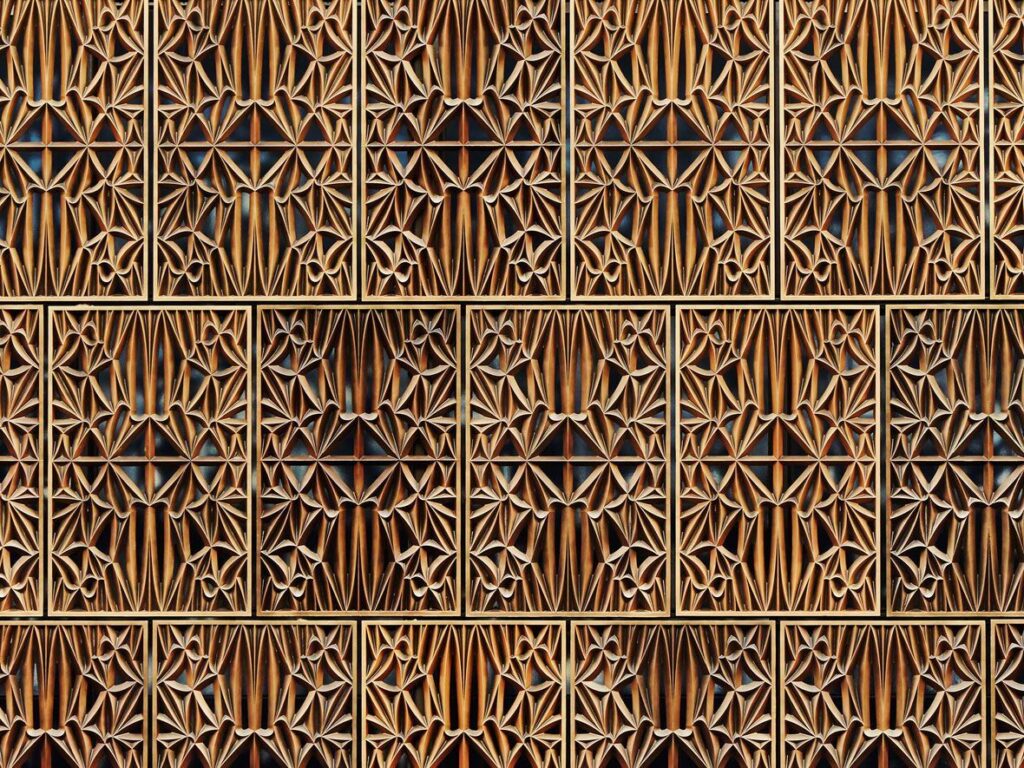
Defining the Terms
Decorative Patterns
These are patterns applied primarily to evoke visual or symbolic meaning. You will find them in tile mosaics, carved timber screens, Islamic muqarnas, or Art Deco facades. They reflect cultural memory, identity, and ornamentation. Decorative patterns are not always essential to the performance of the building, but they are almost always essential to its experience.
Functional Patterns
These are patterns derived from utility: structural grids, column spacing, circulation logic, passive ventilation openings, and drainage gradients. These patterns serve practical purposes, ensuring that a building stands up, breathes, and flows as intended. They can be invisible to the user, but without them, the building cannot function.
The Misunderstood Divide
Modernism famously rejected decoration as dishonest or superfluous, favouring pure function and form derived from it. Louis Sullivan’s mantra, “form follows function,” became dogma. In that context, decorative patterns were often deemed wasteful or regressive.
But if we zoom out from the dogma and look across history and cultures, we see that architecture has always been a vessel for both utility and expression. The ancient Greeks imbued functional structural elements like columns with ornate fluting. The geometric intricacy of Islamic architecture served both decorative and environmental functions, like controlling light or facilitating airflow. In many indigenous traditions, such as the Afro-Caribbean vernacular, ornament and function are so tightly fused that it’s hard to say where one ends and the other begins.
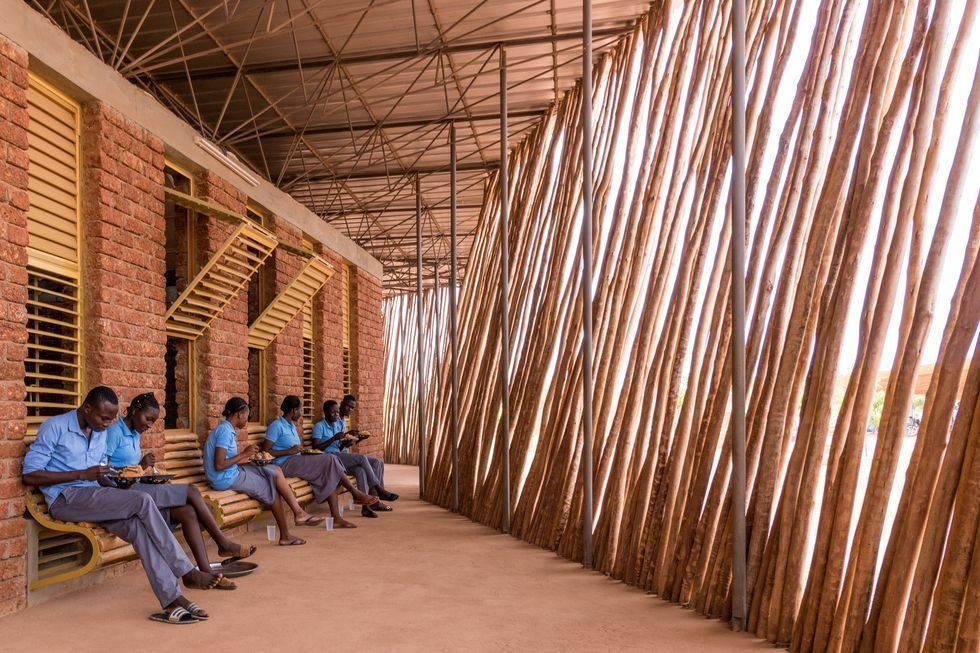
When Patterns Become Hybrids
Some of the most compelling designs emerge when decorative and functional patterns overlap, giving rise to what we might call hybrid patterns. These moments do not just serve or delight, they do both.
Consider:
Brise-soleil screens in tropical architecture. These patterned facades block harsh sunlight (function) while creating mesmerizing light-and-shadow effects (form).
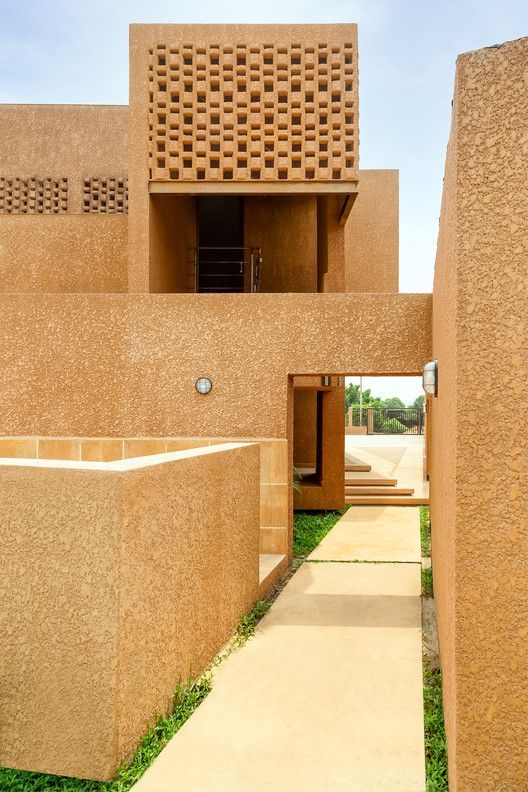
Ventilation blocks or “breeze blocks.” Common in Caribbean and Latin American architecture, these concrete units maintain airflow (function) and create rhythmic, culturally resonant patterns (decoration).Structural expressionism. Think of the Centre Pompidou in Paris, where the building’s mechanical and structural systems are exposed and patterned across the façade. Not hidden, but celebrated.
In each of these cases, pattern is not merely an afterthought. It is integral to the identity and operation of the building.
Why It Matters
Why make this distinction or blur it at all?
Better Design Decisions
Understanding the different types of patterns allows architects and designers to make more intentional decisions. If something is decorative, we can ask: does it resonate with place and people? If something is functional, we can ask: can it also be beautiful?
Resourceful Creativity
In resource-constrained contexts, especially in the Global South, hybrid patterns offer a way to get more from less. A screen that shades and ventilates while telling a cultural story is a triple win: less need for mechanical systems, richer architectural identity, and lower cost.
Deepen Cultural Connection
Patterns are often embedded with cultural, religious, or historical meaning. Ignoring them in favor of purely functional grids risks erasing memory. On the other hand, using pattern purely as ornament without function can result in superficial pastiche.
Human Well-being
We don’t just inhabit spaces, we feel them. Patterns, textures, rhythms, and repetition affect our mental and emotional states. Functional layouts may get us from A to B, but decorative patterns can make that journey meaningful, grounding, even transcendent.
Lessons from the Hillside
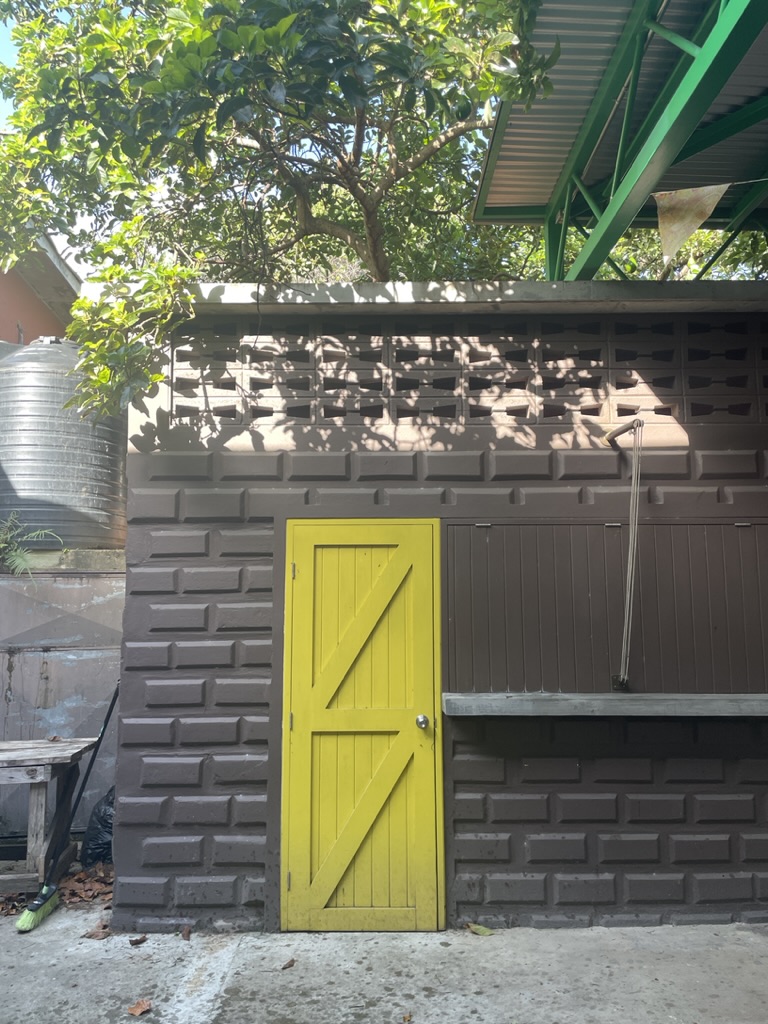
In my own practice, working with hillside communities across the Caribbean, I often return to this balance. The steep, shifting terrains force a certain humility. Function is non-negotiable. Retaining walls, stepped foundations, efficient water flow are the bones of the building.
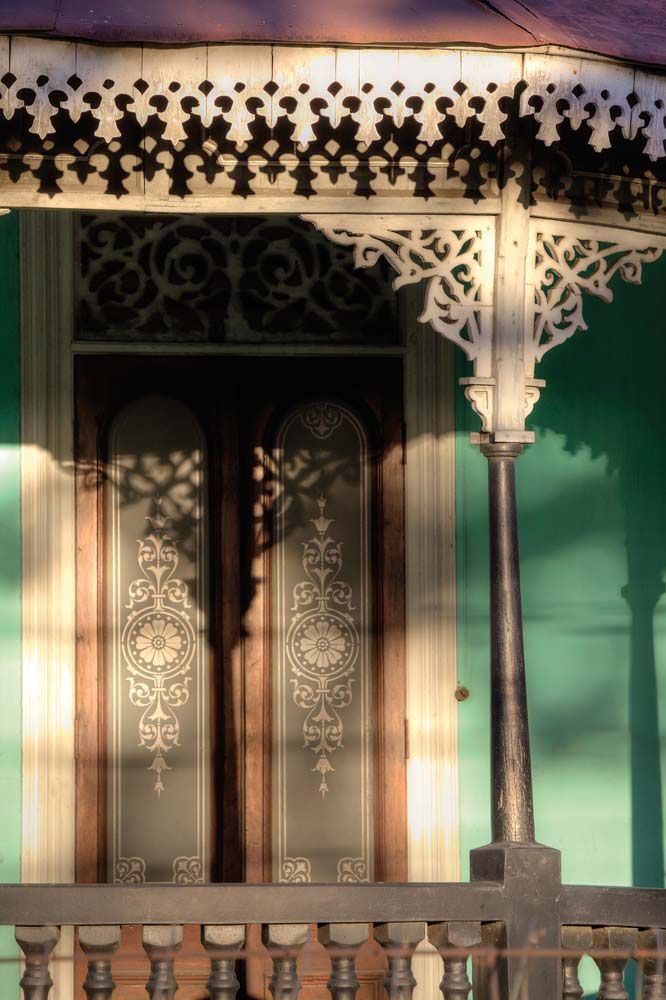
But in these same places, I have seen people add vibrant color, latticework verandahs, carved eaves, and rhythmic blockwork. Not because they have to, but because it transforms a structure into a home. These “decorations” are often shaped by available materials and climate logic, blurring any clean line between function and form.
In fact, many of the most touching patterns I have encountered are born not in studios but in resourcefulness. In families cutting steps into the hill, in rusted zinc roofs patched in patchwork symmetry, in verandahs that shade and socialise all at once. These patterns speak a language of survival, pride, and adaptation.
Rethinking “Function”
Perhaps the issue lies in how narrowly we define “function.”
What if function includes not just structural stability and efficiency, but also cultural meaning, emotional resonance, and sensory experience?
When we expand our understanding of what architecture does, we start to see that decoration is a function. It functions to connect, to comfort, to delight. Similarly, patterns derived from function can, and should, carry their own poetry.
Final Thoughts: An Intimate Entwinement
To design is to pattern. Whether those patterns are born from gravity loads or sacred geometry, they influence how we feel, move, and remember space.
The divide between decorative and functional patterns is useful, but only up to a point. In reality, the best architecture does not choose between form and function. It weaves them together so intimately that one cannot be removed without the other collapsing, like threads in fabric.
In the end, the goal is not just to create buildings that work or look good, but to craft spaces that are both grounded and inspiring. Where the rhythm of a column, the cut of a screen, or the play of sunlight through a patterned wall tells a story that is as practical as it is poetic.
This topic ties in with an excellent webinar we hosted on “Making Great Places”. Check out the webinar and let’s continue the conversation on beauty and utility.